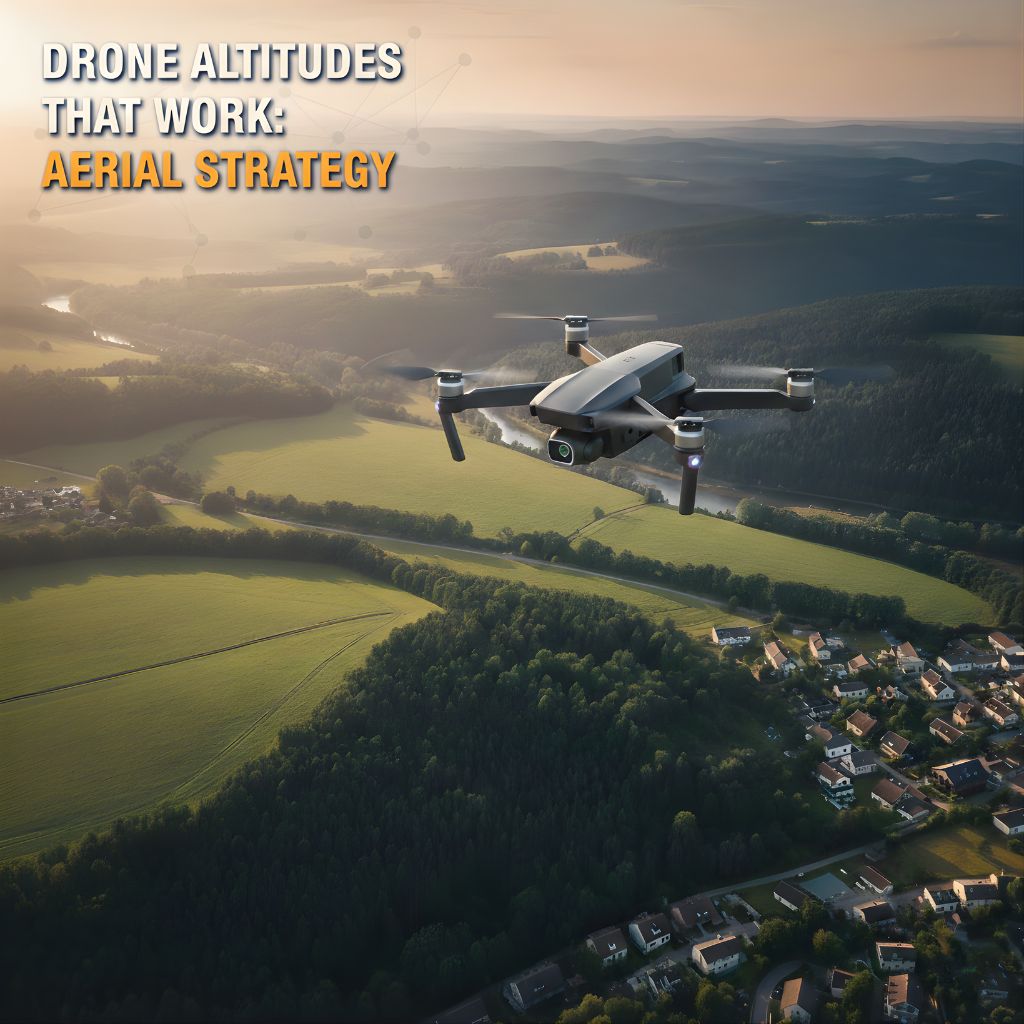
Drone Altitudes That Work: Aerial Strategy in Alaska

Drone photos are almost expected in real estate now—especially in a place as dramatic as Alaska.
But here’s the catch:
Not every aerial shot actually helps a listing.
Some make a property look spacious, private, and desirable.
Others make it look tiny, isolated, or confusing.
Same drone. Same house.
The difference? Where and how high the drone is flown.
In markets like Anchorage, Eagle River, the Mat-Su, Wasilla, Palmer, and the Kenai Peninsula, smart drone strategy can:
Showcase mountain and water views
Explain tricky or unique lots
Highlight privacy, driveway layout, garages, and outbuildings
Help out-of-town buyers understand the location
That strategy starts with one simple thing: altitude.
Why Height Changes How Buyers Feel About the Listing
Most buyers don’t say, “That drone shot is 200 feet too high.”
What they do say is:
“That yard looks huge.”
“I love how tucked back that house is.”
“I can’t really tell what’s around it…”
Altitude affects:
How big the home feels
How close (or far) neighbors appear
How well people can understand the lot and surroundings
Too low, and it just feels like a slightly elevated regular photo.
Too high, and it starts to look like a map instead of a home.
You want that middle ground where buyers get both:
An emotional connection
A clear sense of space and setting
FAA Regulations: The Safety & Legal Side ✈️
Before we get too excited about angles and views, it’s important to remember:
Real estate drone work is commercial flying.
That means, in the U.S.:
It must be done under FAA Part 107
Maximum standard altitude is 400 feet above ground level (AGL)
The drone must stay within visual line of sight
Certain areas (especially near airports, bases, or controlled airspace around Anchorage and other hubs) may require airspace authorization or have restrictions
As a Realtor, you don’t need to quote regulations—but you do want to know your media team respects them.
With DMD Real Estate Photography Alaska, you can tell your clients confidently that:
We operate under FAA Part 107 rules
We fly within legal altitude limits and check local airspace
Safety and compliance come first—no “wild west” flying just to get a shot
It protects you, your clients, and your reputation—while still giving you great aerial media.
Low Altitude: Showcasing the Home Up Close
Think roughly roofline up to around 20–40 feet.
This is often the best starting point for Alaska listings.
What Low-Level Drone Shots Do Well
Make the front of the home look more dynamic and inviting
Show the driveway, parking, and entry clearly
Capture details like:
Covered porches
Garages and shop access
Front yard layout and immediate surroundings
In places like Anchorage, Eagle River, and newer subdivisions in the Mat-Su, this height:
Keeps the home feeling approachable
Gives a hint of setting (trees, road, neighboring homes)
Still puts the house itself at center stage
This is often the best choice for:
MLS cover photos
“Just listed” social posts
First impressions in photo galleries
Mid Altitude: Lot, Layout, and Usable Space
Now we’re talking around 60–120 feet up, still within safe and legal limits.
This is where the drone starts answering big buyer questions:
“How big is the yard really?”
“How does the home sit on the lot?”
“Where are the outbuildings?”
Why Mid-Level Aerials Matter in Alaska
Many Alaska properties don’t fit the typical suburban mold:
Long driveways
Extra parking for trucks, trailers, and boats
Detached garages, shops, sheds, greenhouses
Mixed trees, clearings, and usable yard space
A mid-altitude shot can show:
House + driveway + yard + main outbuildings in one frame
How much usable open area there is around the house
How close neighbors actually are (or aren’t)
This altitude is especially useful for:
Mat-Su and Palmer/Wasilla area homes with extra room around them
Properties with multiple structures
Listings where “space for toys,” “shop,” or “RV parking” is a big selling point
Higher Altitude: Context, Views, and Big Picture
Now think up to ~200–300 feet, still staying within the 400 ft AGL limit and any local airspace restrictions.
At this height, you’re telling the location story.
What Higher Shots Can Show
Mountain ranges on the horizon
Proximity to inlets, lakes, rivers, or forests
How the neighborhood or area is laid out
How close you are to town, main roads, or open land
For example:
A home in Anchorage might show Chugach mountains in the background.
A place on the Kenai Peninsula might show water, trees, and nearby streets.
A semi-rural Mat-Su property may be seen surrounded by trees and open land.
These shots are especially helpful for:
Out-of-state or relocating buyers
Higher-end listings where setting is part of the value
Properties marketed for their “Alaska feel”—space, scenery, and environment
The trick? Don’t go so high that the home disappears into the scenery. The property itself still needs to feel like the star.
When Lower Is Smarter (And When Higher Backfires)
More height doesn’t automatically mean better marketing.
Lower Is Usually Better When:
The house has strong curb appeal
You’re in a tighter subdivision and don’t want to over-emphasize density
The immediate yard and parking situation are big selling points
Higher Can Hurt When:
Nearby lots are cluttered, messy, or under construction
The home looks tiny and insignificant at that height
A busy or noisy road becomes more obvious from above
Sometimes the best drone strategy is choosing not to go higher than you need.
Acreage, Cabins & Remote Properties: A Different Altitude Mix
In more rural parts of Alaska—think:
Outskirts of Wasilla, Palmer, and the Mat-Su
Cabins and recreational properties
Larger lots or land-heavy listings
…altitude becomes even more important.
What Usually Works Best
Mid to higher shots to:
Show approximate property boundaries and overall setting
Capture outbuildings, cleared areas, tree lines, and terrain
Communicate privacy and seclusion
Low-to-mid shots to:
Keep the home or cabin feeling central and relatable
Show how someone actually arrives, parks, and uses the space
Buyers for these properties are trying to answer:
“What does life here actually look like?”
The right mix of altitudes tells that story faster than any paragraph.
Think in Sets, Not Just “One Drone Pic”
The strongest aerial media doesn’t come from one random drone shot—it comes from a small set that works together.
A good sequence might look like:
Low front-angle aerial
“Here’s what arriving at this home feels like.”
Mid-level lot shot
“Here’s how the home, yard, driveway, and extras all fit together.”
Higher context shot
“Here’s where you are in relation to mountains, water, forest, or town.”
Those three images help buyers quickly understand:
The home
The property
The setting
That clarity builds confidence—and confidence leads to more serious showings.
How DMD Real Estate Photography Alaska Handles Drone Work
At DMD Real Estate Photography Alaska, drone is not just an add-on—it’s part of your listing strategy.
We:
Fly under FAA Part 107 for all commercial real estate work
Respect altitude limits, airspace rules, and safety practices
Choose altitudes and angles based on:
The property
The surrounding area
What you, the Realtor, want to highlight
We also make sure your aerials:
Match your ground photos in style and feel
Support your description and talking points
Help your sellers feel their home is being showcased with care
If you tell us:
“The view from this side is everything.”
“Please show how far back this sits from the road.”
“The shop/garage is a huge selling point.”
—we’ll build that directly into how and where we fly.
How to Talk About This with Your Sellers
You don’t have to give a drone lecture. Just show them there’s a plan.
Something like:
“We’ll be using professional drone media with DMD Real Estate Photography Alaska. They follow FAA rules and use different heights to show your house, your lot, and your surroundings in a way that really helps buyers understand what you’ve got here.”
That sounds safe, intentional, and premium—because it is.
Final Takeaway: Drone Is Common. Smart Drone Strategy Isn’t.
Plenty of listings in Alaska have drone photos.
But not all of them use drone in a way that:
Helps buyers
Respects FAA rules
Tells a clear story about the property
When you pair:
Well-planned altitudes
FAA-compliant flying
Strong interior/exterior photography
Optional video, 3D tours, or floor plans
…you’re not just saying, “We use drone.”
You’re showing sellers:
“We know how to market your Alaska property in a way that feels honest, impressive, and easy for buyers to choose.”
Ready to Upgrade Your Alaska Listings from the Air?
If you’re a Realtor in Anchorage, Eagle River, the Mat-Su, Wasilla, Palmer, or the Kenai Peninsula and want drone media that’s both powerful and professional, we’d be glad to partner with you.
➡️ Book Your Next Drone-Enhanced Listing Shoot with DMD Real Estate Photography Alaska
We’ll handle the heights, angles, and FAA side so you can stay focused on clients and closings. 🚁❄️🏡
